
The manufacturing of a ceramic kamado is a demanding process, where every detail directly influences cooking performance, durability, and user experience. At COEO, the QUATRO kamado, also known as a Japanese ceramic barbecue, is designed with a unique approach that combines advanced engineering, artisanal craftsmanship, and award-winning design.
Each QUATRO kamado is the result of a complete and rigorous process, designed to offer controlled cooking, reduced charcoal consumption, and exceptional thermal performance, whether for smoking, grilling, roasting, or simmering.
Design of the QUATRO kamado: an architecture designed for performance
The performance of a kamado primarily relies on its design. The QUATRO stands out with a perfectly studied conical shape, which optimises air circulation and allows for rapid temperature rise as well as extremely precise cooking control.
This specific architecture allows for a constant and homogeneous heat to be maintained throughout the entire bowl, while preserving the moisture of the food. The result is a more even cooking process that enhances the products and guarantees perfect textures, whether for slow cooking or high-temperature cooking.
At the heart of this performance lies an exceptional ceramic. The QUATRO is made from an innovative alloy combining cordierite and silicate (mullite), known for its resistance to thermal and mechanical shocks. This composition allows the kamado to withstand extreme temperatures while maintaining its structural stability.
With a thickness of 3.5 cm, the ceramic of the QUATRO offers remarkable thermal inertia, capable of maintaining heat for long hours with very low fuel consumption.
Manufacturing of ceramic parts: a precision process
The manufacture of a QUATRO kamado relies on a sequence of rigorous technical steps, each essential to ensure a durable and high-performing final product.
The process begins with the preparation of the clay, which is meticulously mixed with specific materials to achieve a homogeneous and stable texture. This mixture is then worked to eliminate any presence of air, which could weaken the structure during cooking.
Once prepared, the material is moulded using shapes developed exclusively for the QUATRO. These moulds, unique in the world, allow for perfectly calibrated pieces, whether it is the base, the bowl, or the lid. This precision is essential to ensure a perfect seal and optimal air circulation inside the kamado.
Drying is a crucial phase. The ceramic pieces are left to dry slowly for several days, which prevents internal tensions and cracks. This step ensures the stability of the material before its firing.
High-temperature cooking: the key to durability
After drying, the pieces undergo a very high-temperature firing process, known as sintering. This step takes place in specialised kilns, where temperatures typically reach between 1000 and 1300 degrees.
This temperature rise transforms the material into an extremely resistant structure, capable of withstanding significant thermal shocks without cracking or deforming. It is this step that gives the kamado its durability and its ability to maintain a constant heat over long periods.
Once the cooking is complete, each piece is carefully inspected to detect the slightest imperfection. Items that do not meet quality standards are systematically discarded or recycled, ensuring a high level of demand for each final product.
QUATRO: an award-winning kamado between design and performance
The QUATRO is distinguished not only by its technical performance but also by its unique positioning in the world of design. It is to date the only kamado in the world to have received three major design awards, placing it at the intersection of gastronomy, innovation, and aesthetics.
Designed as both a functional and architectural object, it integrates perfectly into premium outdoor spaces, whether they are gardens, terraces, or professional kitchens.
A multifunctional kamado for a limitless kitchen
The QUATRO embodies the ultimate versatility of the modern kamado. Thanks to its design and thermal mastery, it allows for a wide variety of culinary techniques, ranging from delicate smoking to slow cooking, as well as high-temperature searing and roasting.
It thus allows for:
- Smoking meats or fish with precision
- Slow-cooking dishes at low temperatures
- Grilling with intense heat
- Searing pieces in a matter of seconds
- Roasting with even cooking
This ability to adapt to the needs of chefs and enthusiasts makes it a true wood-fired oven, usable all year round.
Why the QUATRO is one of the best kamados on the market
The QUATRO kamado establishes itself as a reference thanks to a unique combination of factors that make all the difference: an optimised design for air circulation, innovative and durable ceramics, a rigorous manufacturing process, as well as an award-winning design recognised internationally.
It perfectly meets current expectations, where outdoor cooking becomes a complete experience blending performance, aesthetics, and emotion around the fire.
Conclusion: a kamado designed to last and perform
The manufacturing of a QUATRO kamado leaves no room for improvisation. Every step, from design to the firing of the ceramics, is designed to ensure a durable, high-performing product capable of enhancing cooking over fire.
This level of demand makes the QUATRO much more than just a simple ceramic barbecue. It becomes a precision tool, a design object, and a true centre of culinary experience.
Where are kamados made: a market reality
Contrary to some preconceived ideas, no kamado is currently manufactured in France, including high-end models. The vast majority of kamados available on the international market, whether from recognised brands or specialised manufacturers, are produced in China, where a specific industrial expertise related to technical ceramics and high-temperature cooking processes is concentrated.
This reality can be explained by several factors, including local mastery of ceramic sintering processes, access to suitable raw materials, and the existence of industrial tools capable of producing thick parts that are resistant to thermal shock and mechanical stress. However, the difference is not made on the place of manufacture, but on the level of demand, design, materials, and quality control imposed by the brand.
Thus, a premium kamado like the QUATRO stands out not by its geographical origin, but by the rigor of its specifications, the quality of its ceramic, its design, its exclusive moulds, and the quality controls applied at every stage of production. It is this requirement that makes all the difference in terms of performance, durability, and cooking experience.
FAQ – Fabrication of QUATRO kamados and ceramic barbecue
How is a ceramic kamado like the QUATRO made?
The manufacturing of a ceramic kamado like the QUATRO relies on a complex process that combines clay preparation, moulding, slow drying, and firing at very high temperatures. Each step is essential to ensure a robust structure and optimal thermal performance, allowing the barbecue to withstand extreme temperatures while providing even and precise cooking.
Why is ceramic used in kamados?
Ceramic is used in kamados because it has an excellent ability to retain and distribute heat evenly. In the case of the QUATRO, the use of an innovative alloy based on cordierite and mullite further enhances this performance, improving resistance to thermal shock and allowing stable cooking over long durations.
What is the importance of the thickness of the ceramic in a kamado?
The thickness of the ceramic plays a crucial role in the performance of a kamado, as it determines its ability to accumulate and release heat. With a ceramic thickness of about 3.5 cm, the QUATRO is capable of maintaining a constant temperature for several hours, while reducing charcoal consumption, making it a particularly efficient choice for long cooking.
Why does a kamado offer better cooking than a traditional barbecue?
A kamado offers better cooking than a traditional barbecue thanks to its ability to precisely control air circulation and internal temperature. Unlike a traditional barbecue, heat is evenly distributed throughout the body, allowing for both slow cooking and high-temperature cooking without drying out the food.
How long does it take to make a kamado?
The making of a kamado can take several days, or even several weeks, as it includes essential drying and firing phases to ensure the quality of the material. Slow drying helps prevent cracks, while high-temperature firing ensures the strength and durability of the product.
What is sintering in the making of a kamado?
Sintering is a key step in the manufacturing process of kamados, during which the ceramic parts are heated to very high temperatures, typically between 1000 and 1300 degrees. This phase hardens the material, making it extremely heat-resistant and ensuring its ability to withstand intense cooking conditions.
Why is quality control important for a kamado?
Quality control is essential in the manufacturing of a kamado, as even the slightest crack or imperfection in the ceramic can compromise the durability and performance of the device. That is why each piece is inspected after firing to ensure it meets the highest standards before being assembled.
What makes the kamado QUATRO unique in the market?
The QUATRO stands out for its unique combination of design, innovation and performance, particularly thanks to its optimised conical shape, high-density ceramic and design awards. It is today one of the few kamados that combines professional culinary performance with high-end aesthetics.
Why is the conical shape of a kamado important?
The conical shape of a kamado plays an essential role in air circulation and heat management. It optimises the draw and ensures a rapid temperature rise while maintaining a constant heat, which significantly improves cooking accuracy.
What are the cooking capabilities of a QUATRO kamado?
The QUATRO kamado is a multifunctional device that allows for smoking, simmering, grilling, searing or roasting with great precision. Thanks to its design and thermal control, it offers great versatility and allows for cooking a wide variety of dishes with a single appliance.
Where is the QUATRO kamado made?
The QUATRO kamado is manufactured according to a controlled process that combines innovation, engineering and specialised know-how, with particular attention paid to the quality of materials and production stages. This requirement ensures a durable, high-performing product that meets professional standards as well as those of discerning individuals.
Why invest in a ceramic kamado rather than a traditional barbecue?
Investing in a ceramic kamado allows for better cooking control, greater versatility, and superior durability. Unlike a traditional barbecue, a kamado like the QUATRO enables long cooking, retains the moisture of food, and reduces fuel consumption, all while offering a more advanced culinary experience.
FAQ – Fabrication of QUATRO kamados and origin of ceramic barbecues
Where are kamados made today?
Today, it is important to understand that the vast majority of kamados are made in China, regardless of their market positioning or brand. As of now, there is no industrial production of kamados in France capable of producing technical ceramic parts that meet the thermal requirements of this type of equipment. This concentration of production is explained by the mastery of very high-temperature ceramic cooking processes and the availability of suitable materials.
Are there kamados made in France?
Contrary to some marketing beliefs, there is no kamado entirely made in France. However, some French brands, like COEO with the QUATRO, design their products in France, develop their own moulds, and impose a strict specification, then have the parts manufactured in specialized units, mainly in China. The difference lies in the design, quality control, and level of requirement, not in the place of production.
Why are kamados made in China?
Kamados are made in China because this country has a historical and industrial know-how in the manufacture of high-density technical ceramics, essential for withstanding extreme temperatures and repeated thermal cycles. The infrastructure, sintering kilns, and mastery of alloys such as cordierite or mullite allow for the production of reliable and durable parts, which are difficult to produce elsewhere on a large scale.
Does the quality of a kamado depend on the country of manufacture?
The quality of a kamado does not directly depend on the country of manufacture, but on the level of demand of the brand that designs it. Two kamados produced in the same country can have totally different performance levels depending on the quality of the materials used, the precision of the molds, the thickness of the ceramic, and the quality controls carried out after manufacturing.
What differentiates a QUATRO kamado from other kamados?
The QUATRO kamado stands out for its holistic approach based on innovation, design, and performance. It relies on thick, dense ceramic, an optimised conical shape for air circulation, as well as exclusive molds developed specifically to improve precision and durability. These elements allow for more even cooking, better heat retention, and reduced charcoal consumption.
Why is ceramic essential in a kamado?
Ceramics are at the heart of a kamado's operation as they allow for the storage and even distribution of heat, which is essential for long and controlled cooking. Unlike a metal barbecue, a ceramic kamado maintains a stable temperature for several hours while retaining the moisture of the food, which significantly improves the final result.
How is a ceramic kamado made?
The manufacturing of a ceramic kamado follows a precise process that includes the preparation of clay, the moulding of the different parts, a slow drying to avoid cracks, and then a high-temperature firing, known as sintering, often between 1000 and 1300 degrees. This transformation results in an extremely durable structure capable of withstanding intensive cooking conditions.
What is the importance of quality control in a kamado?
Quality control is a crucial step in the manufacturing of a kamado, as even the slightest imperfection in the ceramic can lead to cracks or a loss of thermal performance. The parts are therefore systematically inspected after firing, and those that do not meet the standards are rejected. This level of demand ensures a reliable and durable product.
Why is a kamado more efficient than a traditional barbecue?
A kamado is more efficient than a traditional barbecue because it allows for precise control of temperature and air circulation while retaining the moisture of the food. Its closed structure and thick ceramic enable even cooking, whether at high temperatures for searing or at low temperatures for simmering or smoking.
Is the QUATRO kamado suitable for professional use?
The QUATRO kamado is perfectly suited for professional use, particularly in high-end restaurants and establishments, as it combines cooking precision, versatility, and reliability. It allows for complex cooking with great consistency while integrating into environments where aesthetics and customer experience are essential.
Why invest in a high-end kamado?
Investing in a high-end kamado allows you to benefit from durable, high-performing, and versatile equipment, capable of replacing several cooking appliances. It offers better heat management, reduced fuel consumption, and a richer culinary experience, making it a strategic choice for discerning enthusiasts as well as professionals.
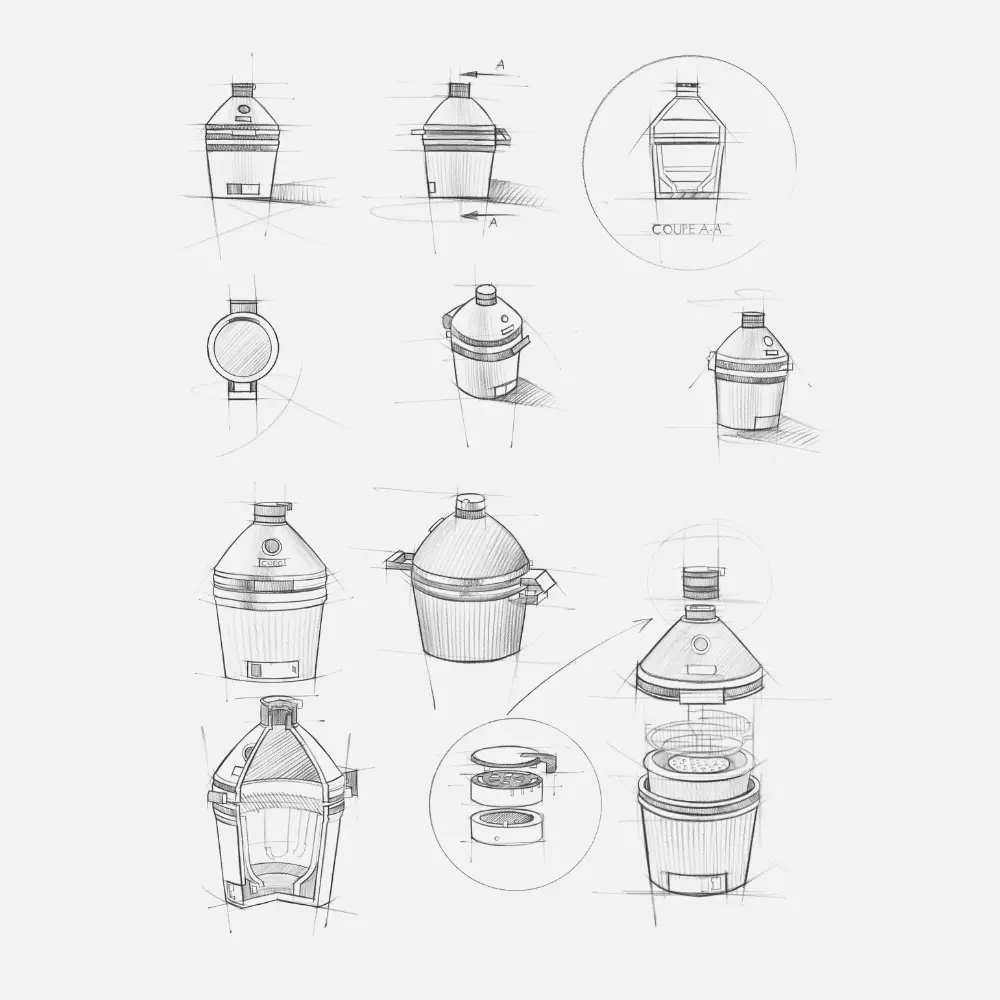
Design and design of kamados.
The performance of the QUATRO is notably based on the perfect combination of its conical shape and the quality of its ceramic. This allows for easy and quick lighting, uniform and consistent cooking, food preservation, as well as low charcoal consumption.
Made of ceramic, the QUATRO benefits from the most innovative ceramic quality on the market. Composed of a cordierite and silicate (mullite) alloy, it is more resistant to thermal and physical shocks. Dense and thick (3.5cm), the ceramic of the QUATRO ensures optimal heat retention for long hours.
The kamados
Discover the range of ceramic barbecues!
Key questions.
A few questions about the French ceramic barbecue (kamado): the QUATRO.
The French QUATRO kamado barbecue from the COEO brand is made in China.
The production of a QUATRO ceramic kamado barbecue combines traditional and modern methods to produce a high-quality ceramic barbecue ("kamado") capable of cooking at high temperatures while ensuring excellent heat retention. The process relies on mastery of ceramics and meticulous assembly, with particular attention to thermal performance and durability.